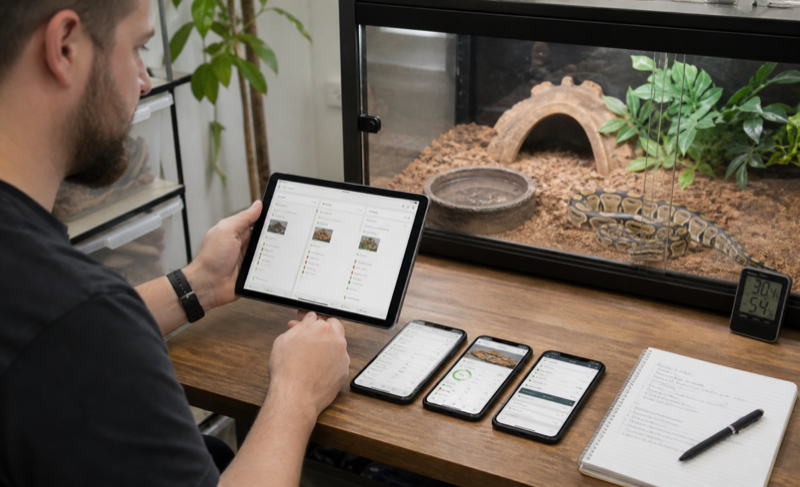
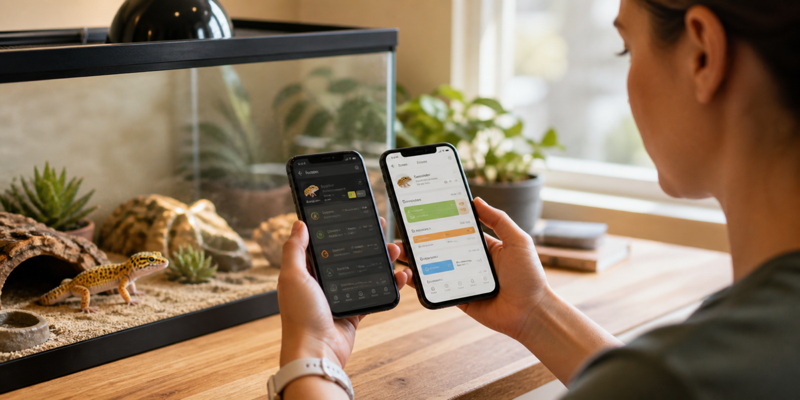
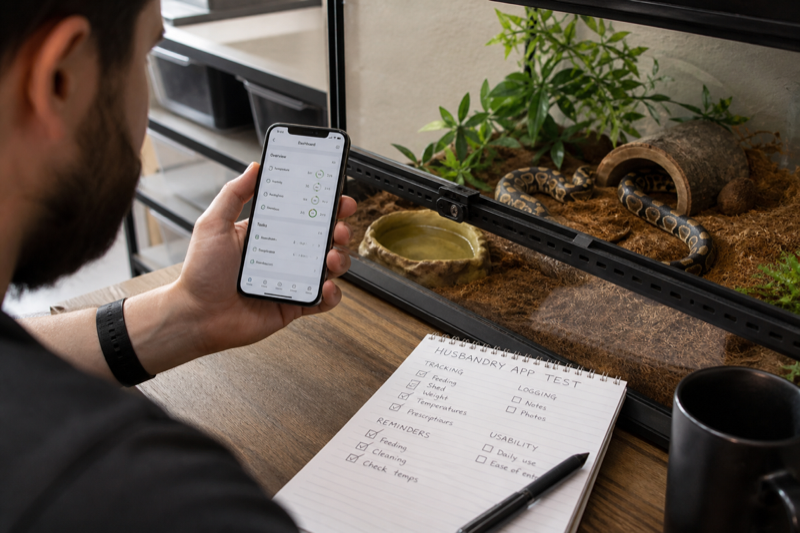
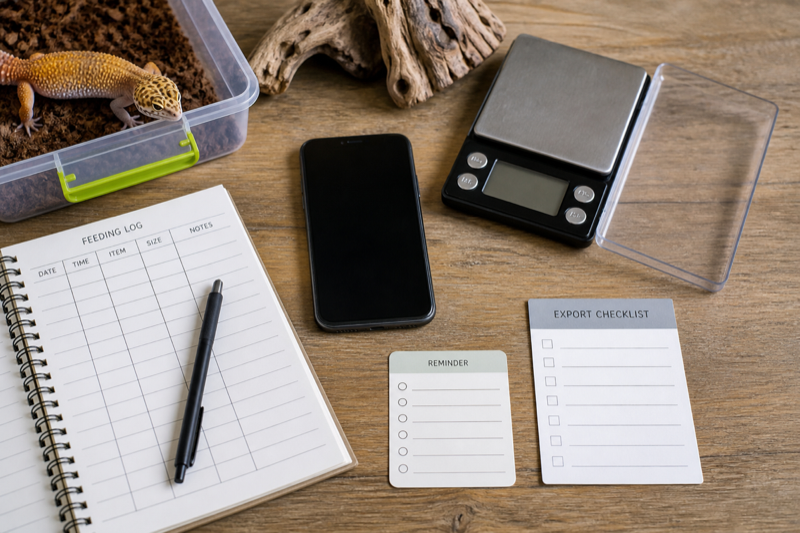
Editorial note: this review evaluates Scutely’s current public feature set, documentation and pricing against ordinary keeper and breeder workflows. Features and plan limits can change, so confirm them before moving a large collection.
Verdict: Scutely is one of the more ambitious reptile record systems now available. It combines routine husbandry, breeding records, QR labels, public animal pages and ownership transfers in one web and mobile account. The free plan is useful enough to expose the workflow, while the paid tiers make the most sense for keepers who will use the breeder and batch tools rather than treating the app as a prettier notebook.
The appeal is breadth, but breadth also creates the main risk. A keeper can spend a weekend building detailed profiles and still discover that the feeding screen, label layout or export does not match the way the room actually runs. Test Scutely with five deliberately awkward records before importing everything: two animals with similar names, a feeding refusal, a breeding loan, a corrected weight and a transfer you do not complete.
Scutely at a glance
| Best for | Mixed collections and breeders who want care, lineage and QR workflows in one service |
|---|---|
| Platforms | Web, iOS and Android with account sync |
| Free allowance | Up to five animals at the time of review |
| Paid collection limits | 50, 200 or unlimited animals depending on plan |
| Notable tools | Bulk logging, care schedules, breeding records, pedigrees, QR scanning, public pages and transfers |
| Main caution | Plan limits and export detail need to be checked with your own sample data |
Daily husbandry is the first test
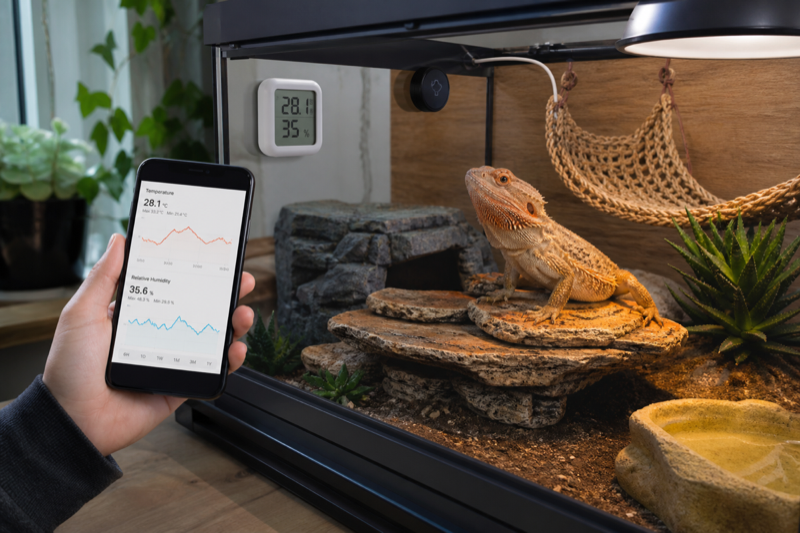
Most record apps are easy during setup. The real test arrives on feeding night when one animal refuses, another takes a different prey size and a third needs a medication note. Scutely publishes support for feeding details, supplements, refusals, weight and length, sheds or molts, treatments, environmental readings, cleaning and custom events. That covers the common cases on paper.
Build a small care group and log the same action for several animals. Then change one animal’s feeder, quantity or result before saving. A useful batch tool keeps the shared parts of the event while making exceptions obvious. If the exception is buried, the speed advantage can create bad data. The reptile feeding tracker comparison explains why refusals and corrections deserve more weight than decorative dashboards.
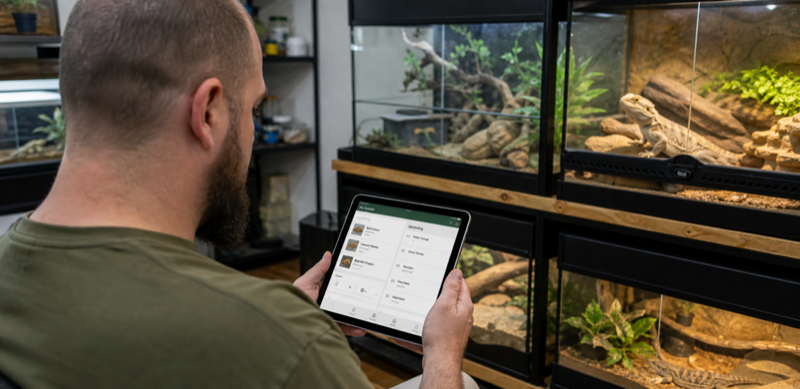
Schedules and the feeder pick list are more interesting than a generic reminder. Scutely can group upcoming feedings by prey item and size, which connects the digital record to a practical shopping and thawing workflow. Check how overdue tasks behave, whether a skipped feeding moves the next date and whether several keepers see the same completion state.
Profiles, IDs and collection structure
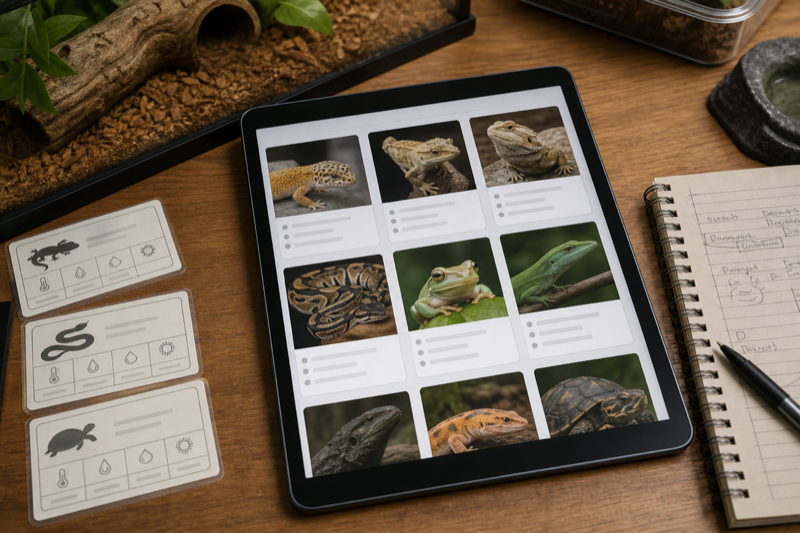
Each animal profile can hold photos, sex, species, traits, lineage and a care timeline. Large collections need stable IDs in addition to names. Two snakes called Luna will eventually cause a mistake. Give every animal a permanent internal ID and store enclosure location separately, because location changes while identity should not.
Scutely’s care groups and filtering can reduce scrolling, but they need to mirror the physical room. Create groups for racks, rooms or care routines, not every trait you might search later. A keeper who is reorganizing fifty tubs should read the guide to managing a large reptile collection before deciding how much structure to build.
Quarantine deserves its own test. A visual indicator is helpful, yet the system still needs a clear start date, location, task schedule and rule for moving the animal into the main collection. Software does not enforce physical separation. It should make the status hard to miss and preserve the history after quarantine ends.
Breeding records and pedigrees
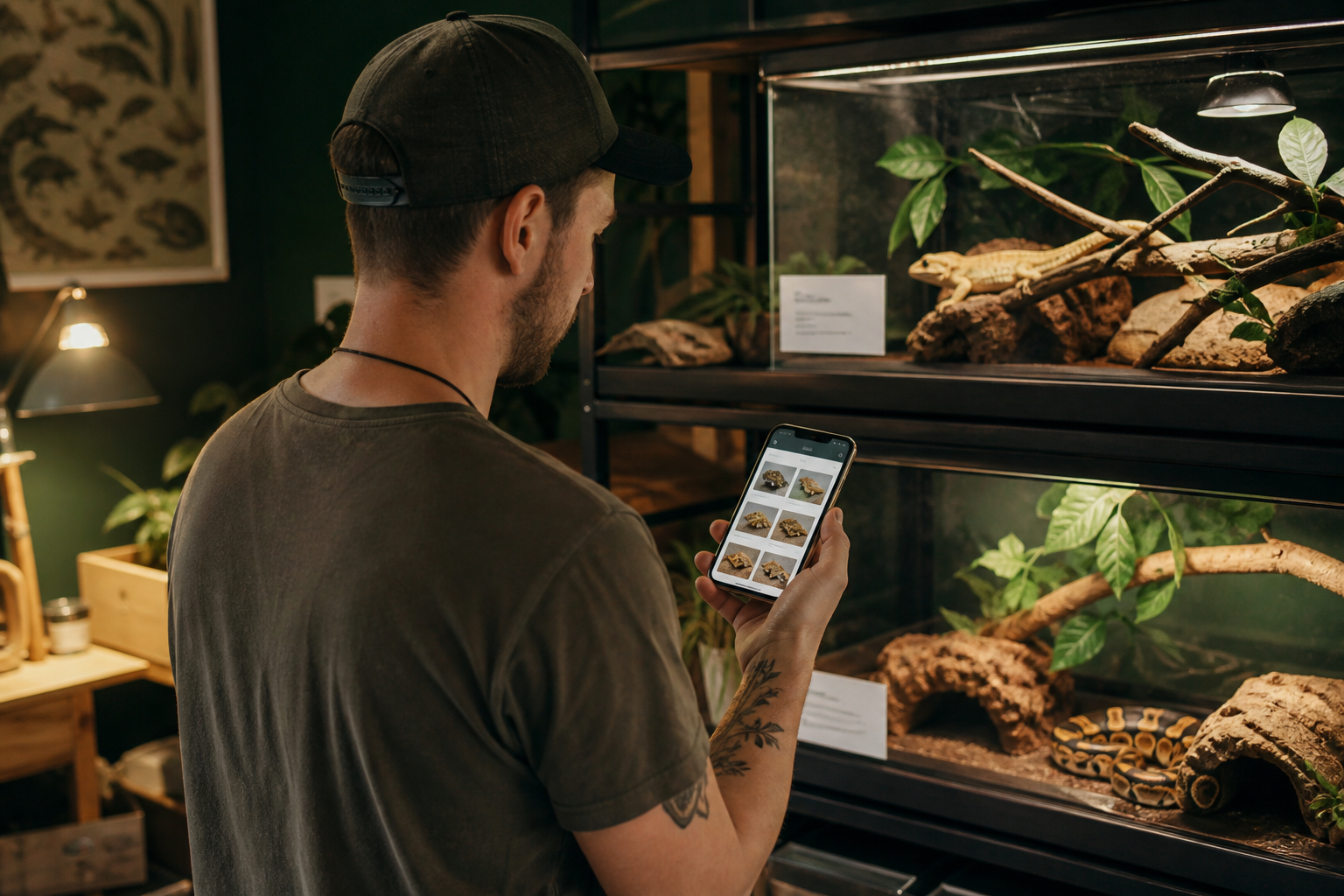
The Breeder tier adds the reason many people will consider Scutely: fuller family trees, pedigrees and broader customization. The service describes pairing support, clutches, offspring, genetics calculations and lineage that follows an animal through transfer. That is a much deeper job than logging meals.
Test a three-generation sample before trusting the pedigree view. Include an unknown parent, a possible het, a repeated pairing and an offspring that changes ownership. Check which facts are calculated, which are manually asserted and how corrections propagate. Genetics software can organize claims, but it cannot verify parentage or replace careful identification.
Breeding loans expose weak permissions quickly. The record should distinguish the owner, current keeper and breeding project without duplicating the animal. Also inspect what the other party can see. Medical notes, purchase price and private contact details should not become public merely because lineage is shared.
QR scanning and label printing
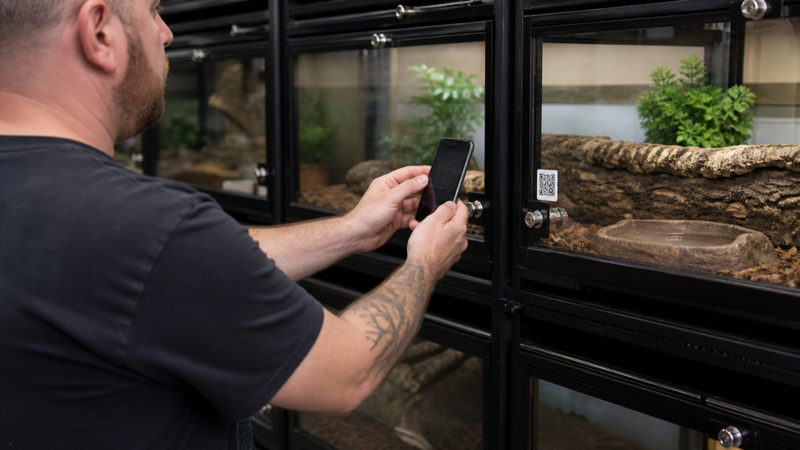
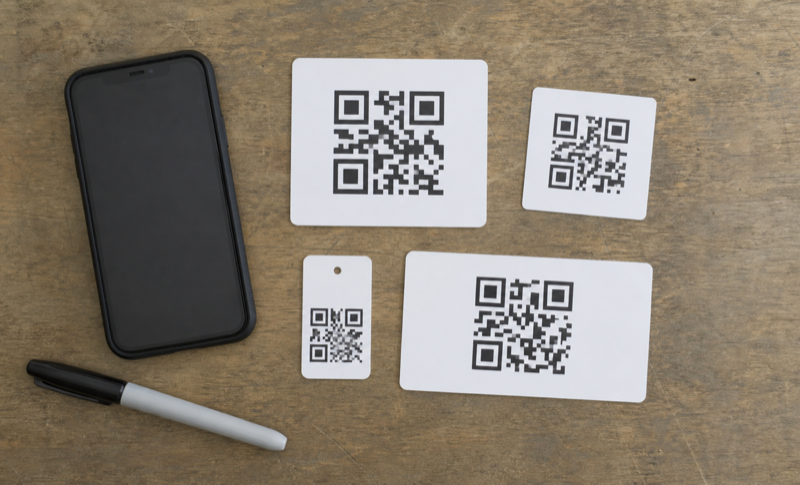
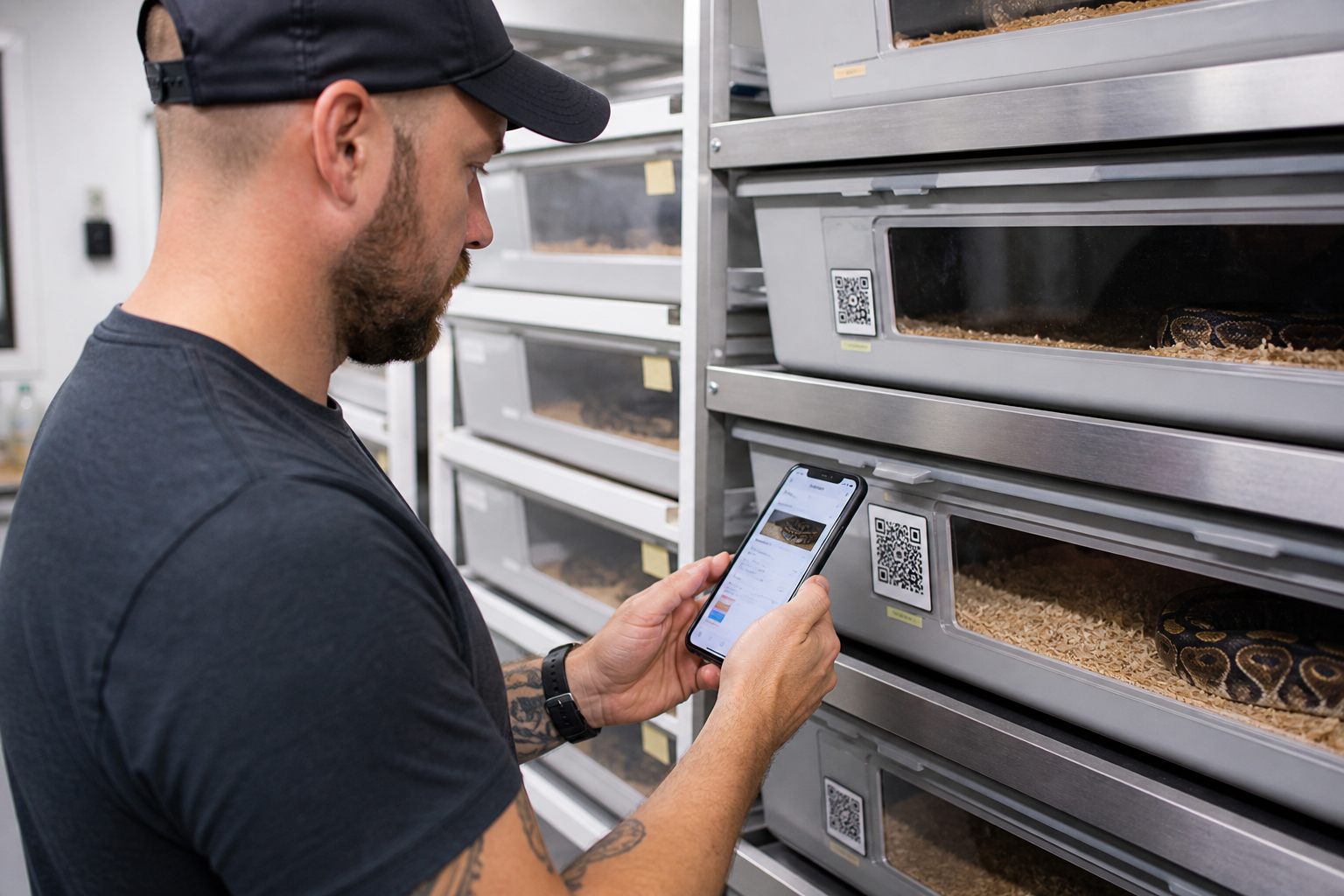
Scutely can generate QR codes and open an animal profile for quick logging. Multi-scan mode is intended for batch work, including feeder overrides. This can be excellent in a rack room, but only when the printed label and confirmation screen prevent wrong-animal entries.
Print several labels at the smallest size you expect to use. Scan them with the oldest phone in the room, under normal lighting, from an uncomfortable angle. Mist one protected sample, clean another and leave a third near a heat source. Keep the human-readable ID beside the code. The practical QR label setup guide covers contrast, privacy and replacement planning in more detail.
A scan should open a large photo, name, ID and location before the event is saved. Speed is useful only after identity is clear. For rack codes, review the selected occupants and the action date before applying a batch entry.
Public animal pages, cards and transfers
Public profiles and sale cards can reduce repetitive buyer questions. Scutely says keepers choose which details appear and medical records stay private. Test that claim from a browser where you are signed out. Inspect the page source, downloadable images and QR destination, not just the signed-in preview.
Ownership transfer is more valuable than a static PDF when both parties use the same platform. It can preserve history and lineage instead of forcing the buyer to rebuild a profile. Still, export an independent copy before transferring. Confirm whether the sender retains a record of the sale and what happens if the recipient never accepts.
Public pages should be treated as publishing, not private record keeping. Remove home addresses, acquisition documents and notes that reveal more than a buyer needs. A show card can identify an animal without exposing the rest of the collection.
Pricing and the point where each plan makes sense
At the time of review, Free covers five animals. Hobbyist raises that to 50 and adds broader photo, sharing, sales-card and customization allowances. Breeder supports 200 animals and unlocks the pedigree depth aimed at breeding projects. Pro removes the practical animal ceiling and expands customization further.
Animal count is only one cost driver. A ten-animal breeding group may need pedigree tools more than a 60-animal pet collection. Work out which locked feature solves an actual weekly problem. The reptile app pricing comparison shows how to calculate cost over several years rather than comparing a free badge with a monthly number.
Downgrades deserve attention. Scutely states that animals above the new plan limit are locked rather than deleted. Make sure you understand which animals remain accessible, whether exports still work and how long inactive accounts are retained. The pricing page currently notes that an account unused for five years may be removed with its data.
Export, backup and leaving the service
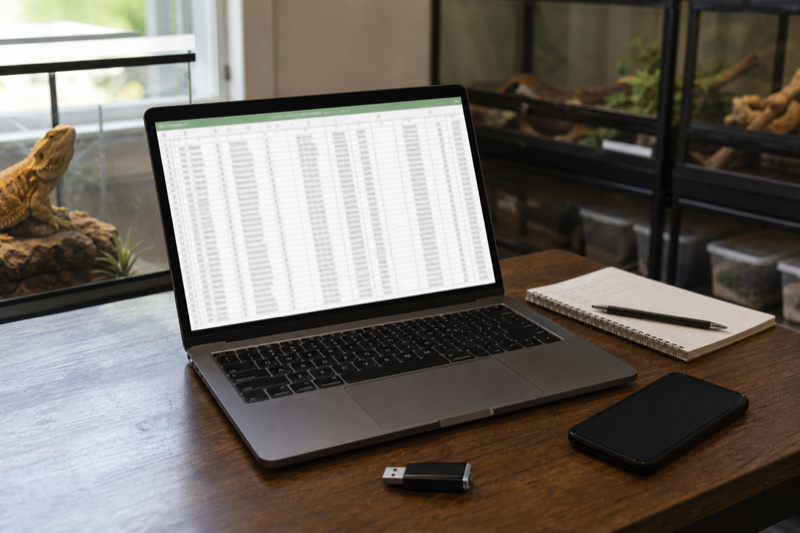
Scutely describes collection export and per-animal history reports. Those are not necessarily the same thing. A readable report is good for a buyer or veterinarian; structured data is better for migration. Export a sample and inspect animal IDs, dates, units, events, lineage, notes and image references.
Open the file in a spreadsheet, then try to rebuild one animal elsewhere. If important relationships exist only as formatted text, moving later will take manual work. Our data export and privacy checklist covers account deletion, permissions and backup frequency.
Do not rely on account sync as backup. Sync keeps devices consistent, including accidental changes. Store dated exports outside the service and keep the original import file if you migrate from a spreadsheet.
How Scutely compares with the main alternatives
Scutely overlaps with Husbandry.Pro and Reptile Scan more than with a minimal pet diary. Husbandry.Pro remains the obvious comparison for a broad breeder system. Reptile Scan is worth considering when a web-managed, scan-first rack workflow is the priority. Reptile Rocket and Terrarium Tracker are lighter choices for smaller collections.
Read the Husbandry.Pro review if customization and established breeder workflows matter most. The Reptile Scan review focuses on labels, registrations and the split between web setup and mobile work. For a broader shortlist, start with the best reptile tracking apps guide.
A sensible seven-day trial
- Create five animals with stable IDs, including two with similar names.
- Import or enter a short history with feeding, refusal, weight, shed and treatment events.
- Build one care group and complete a batch action with an exception.
- Print and scan labels from the actual enclosures.
- Create a sample pairing and follow the lineage into one offspring.
- Open a public page while signed out and inspect every visible field.
- Export the collection, open the file and confirm that the records are usable.
If those seven steps feel natural, Scutely has a credible chance of replacing a mix of notes, spreadsheets and label tools. If two or three steps fight the way the room operates, do not assume a higher plan will fix the workflow.
Who should choose Scutely?
Scutely is a strong candidate for a keeper who expects a collection to grow and wants breeding, sales and QR features without running separate systems. The web and mobile combination also suits people who prefer detailed setup on a larger screen and quick actions beside enclosures.
A keeper with one or two animals may not need this scope. A large commercial operation should test exports, permissions and support response before committing. The app looks most convincing in the middle: serious hobbyists and breeders who need more than a diary but still want a modern interface.
Frequently asked questions
Is Scutely free?
There is a free plan for up to five animals at the time of review. Paid tiers raise collection limits and add more photos, customization, public pages and breeder features.
Does Scutely work on desktop?
Yes. Scutely provides a web app and syncs the account with its iOS and Android apps.
Can Scutely print QR labels?
It supports animal QR codes, cards and label workflows. Test the exact label size, printer and scan distance you use before producing a full rack.
Can I export my data?
Scutely describes collection export and history reports. Verify the file format and included fields with a sample because a readable report and a migration-ready export solve different problems.