Author: lasipton@gmail.com

  • Terrarium Tracker review: reminders, logs and export

    Verdict: This Terrarium Tracker review will judge whether environment records remain accurate, readable and portable. A colorful graph is useful only when the measurements behind it can be trusted.
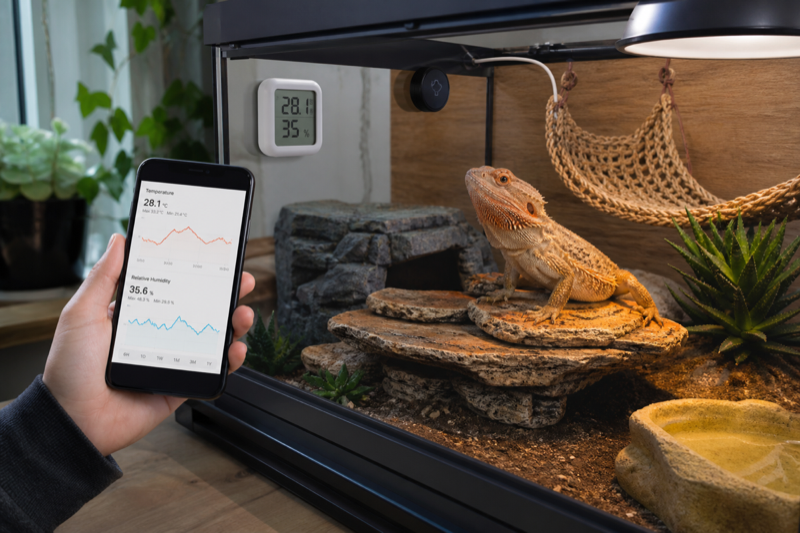
    Keeper reviewing terrarium environment readings on a phone

    Manual entry and connected sensors

    Generic terrarium sensor and handwritten environment log

    Reading the graph

    The test will look for clear units, timestamps, missing-data gaps and editable mistakes. We will compare the displayed trend with the raw entries and note any smoothing that changes how the record appears.

    Alerts are not a thermostat

    An alert can report a reading after it crosses a threshold. It does not replace a thermostat or safe equipment setup. The final article will describe notification delay and connection loss without presenting the app as a safety controller.

    What Terrarium Tracker is trying to solve

    Terrarium Tracker is positioned as a lighter care journal for reptiles, amphibians, spiders and other terrarium animals. Published descriptions mention feeding, molting or shedding, cleaning, reminders, photos and PDF care-history export. That mixed-species focus is useful for households that do not want a separate app for every animal group.

    The important limitation is equally clear: this is a record tracker, not an automatic environmental control system. Temperature and humidity values may be entered as care records, but users should confirm any claimed sensor integration before buying hardware. Never assume a graph means the app controls or independently verifies the enclosure.

    What to test

    • Create a reptile and an invertebrate with different event types.
    • Backdate a shed or molt and correct the entry.
    • Set feeding and enclosure-maintenance reminders.
    • Mark tasks complete and check how overdue items behave.
    • Export a PDF and inspect dates, notes and animal identity.

    PDF export is useful for reading and sharing, but it is not always a migration format. If the app does not also provide structured data such as CSV or JSON, changing services may require manual entry.

    Where it fits

    Terrarium Tracker suits a small mixed collection that values a calm interface and readable histories. Large breeders should look for rack management, clutch links, batch actions, inventory and team roles. Those are different jobs, and adding every breeder feature could make a simple journal worse.

    FAQ

    Does it replace thermometer hardware?

    No. Use appropriate thermostats and independent monitoring. Manual environmental notes can add context, but they do not control heat.

    Is PDF export enough?

    It is good for an archive or vet handoff. A structured export is better for moving records into another system.

    Should I use it for medical advice?

    Use it to document observations and treatment instructions from a veterinarian, not to diagnose an animal.

    Check the wider field: Compare Terrarium Tracker with the options in our best reptile tracking apps guide. Before committing records, use the export and privacy checklist.
  • Reptile Scan review: can QR labels speed up daily records?

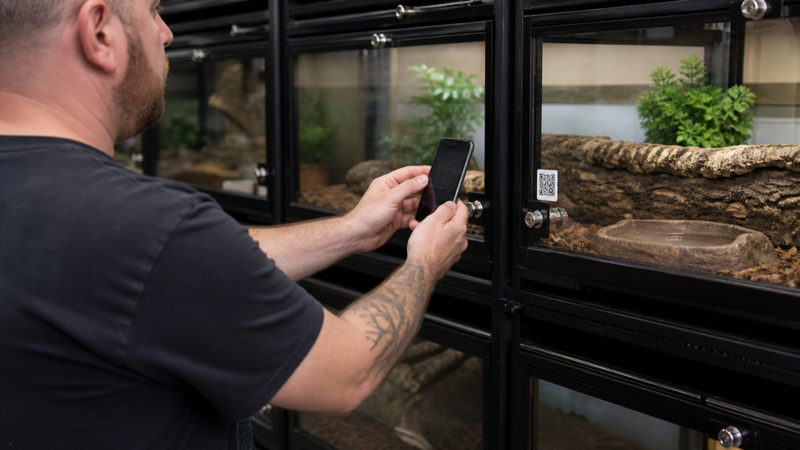
    Keeper scanning an enclosure QR label with a phone

    The scan test

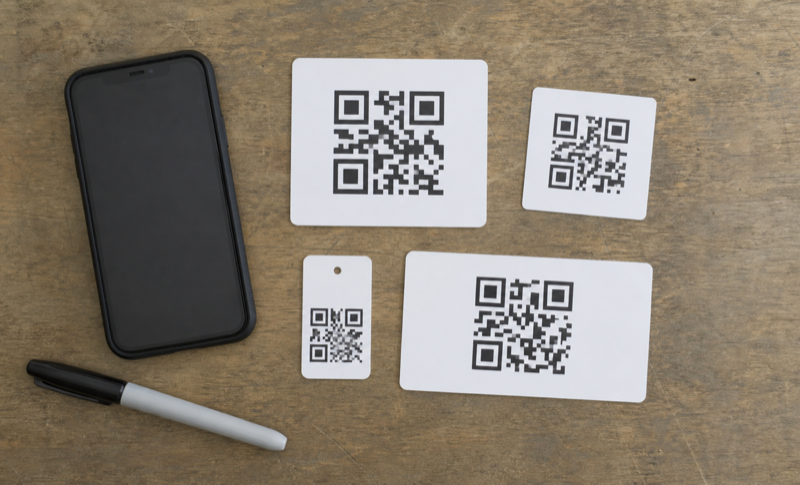
    Enclosure identification cards with abstract QR patterns

    Identity and error recovery

    Offline and export behavior

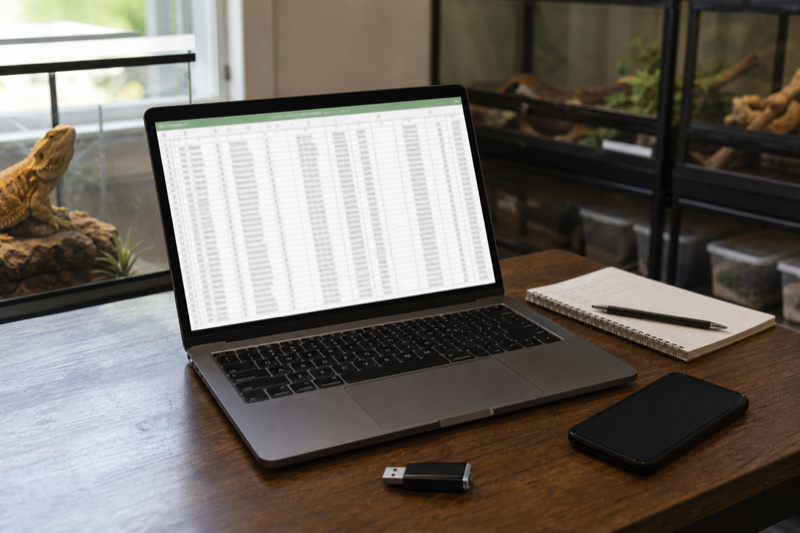
    Laptop spreadsheet beside a phone during a reptile record export test

    Publication gate

    How Reptile Scan works

    Reptile Scan pairs a web console with iOS and Android apps. The web side handles setup, collection management, racks, reports and label generation. The mobile app is centered on fast registrations at the enclosure. The company’s getting-started guide states that animals must be added through the web console before the app can be used for routine actions.

    Scanning a label opens the matching animal or rack, where you can record feeding, shedding, cleaning and other actions. Rack codes can support registrations for several animals. This is a real advantage when the bottleneck is finding the correct profile.

    Plans and limits

    The current free plan lists ten reptiles, two clutches and 100 registrations per month. Standard raises the limits to 100 reptiles and ten clutches with unlimited registrations. Professional removes those limits and adds custom actions, batch tools, feed inventory, team sharing, enhanced labels and other breeder features.

    Choose by event volume, not only animal count. Ten animals can generate more than 100 monthly registrations if you log water, cleaning, feeding and observations separately.

    QR labels in daily use

    A code needs a readable printed label, a phone with camera access and a clear confirmation screen. Print several test labels, expose them to normal room conditions and scan from the angles you actually use. Confirm the animal’s ID before saving an event. A scan should reduce searching, not remove the final identity check.

    The system can create normal and large QR labels, rack labels, sales cards and animal exports. Think about what information is visible to anyone who scans a public-facing label, especially at shows or in shared spaces.

    Who should use Reptile Scan

    It is a strong fit for rack-based collections and breeders who want setup on a larger screen and fast mobile actions later. A keeper with one display enclosure may find the web-console requirement unnecessary. The free plan is large enough to test the split workflow before paying.

    FAQ

    Can I add animals in the app?

    The official getting-started guide says animals are created in the web console.

    Can I export an animal for a buyer?

    The guide describes an export file that another Reptile Scan user can import, plus PDF and sales-card options.

    Reports, transfers and sales

    Reptile Scan can create PDFs, sales cards and an export intended for transfer to another Reptile Scan user. Those are different outputs. Use the PDF for a readable summary, the sales card for a handoff and the structured export when another account needs the record. Confirm which private notes appear before giving any file to a buyer.

    Reports and charts become more useful after event names are standardized. If one helper records “mouse,” another records “small mouse” and a third writes everything in notes, feeding totals will be unreliable. Professional users can create custom actions and categories, but a short written naming policy is still worth keeping.

    Our recommendation

    Reptile Scan is one of the strongest options for racks, repeated daily actions and breeder records. The setup is heavier than a one-pet diary, and the web-console requirement will annoy some mobile-only users. Use the free plan to test label durability, scan confirmation and monthly event volume before choosing Standard or Professional.

    Put scanning into context: The QR code setup guide covers label durability and privacy. The comparison of Reptile Rocket vs Reptile Scan shows when scan-first entry is worth the tradeoff.

  • Hello world!

    Welcome to WordPress. This is your first post. Edit or delete it, then start writing!