Verdict: Reptile temperature monitoring tools answer different questions. A fixed probe shows conditions at one point, an infrared thermometer checks surfaces and a wireless sensor can reveal trends. None of them replaces a correctly configured thermostat.
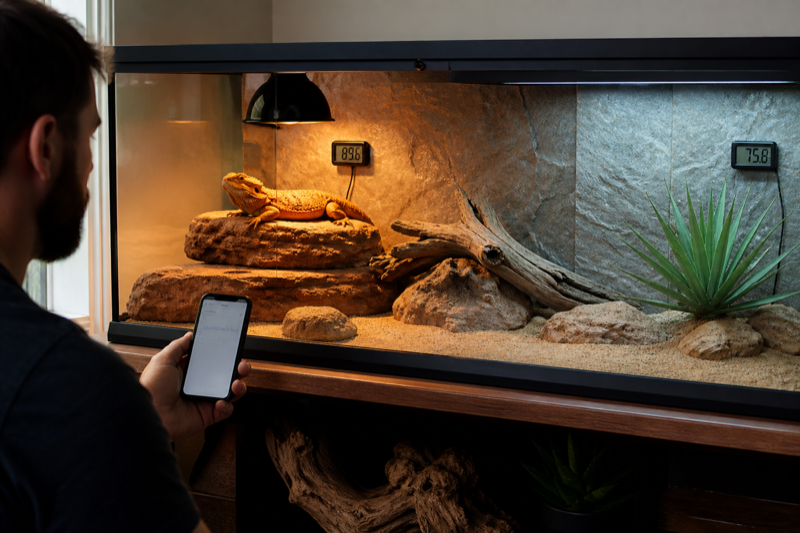
Monitoring is not control
A thermometer reports temperature. A thermostat controls a heat source. Keeping those jobs separate prevents a common and dangerous misunderstanding. An app alert may warn you, but it cannot guarantee that heating equipment will switch safely.
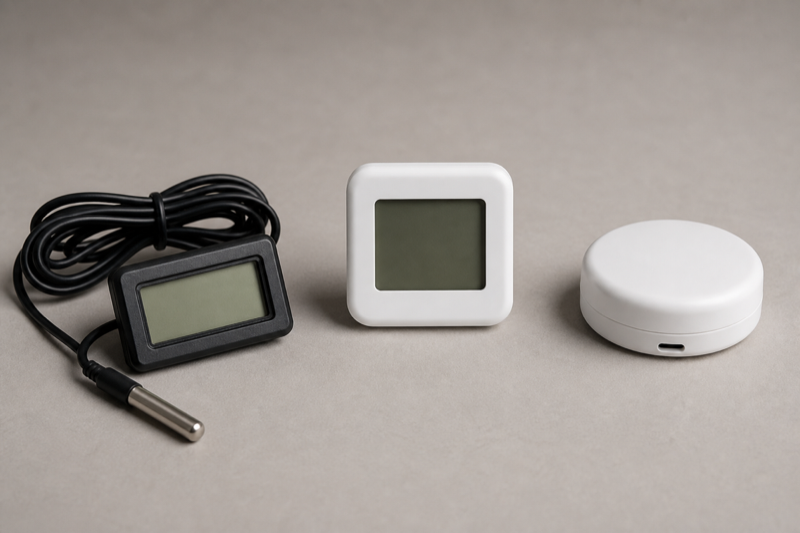
Choose the tool for the measurement
- Probe thermometers are useful for continuous readings at a fixed location.
- Digital hygrometers track humidity where the sensor sits.
- Infrared thermometers check surface temperature at the moment of use.
- Wireless sensors can store trends and send remote alerts.
Placement changes the reading
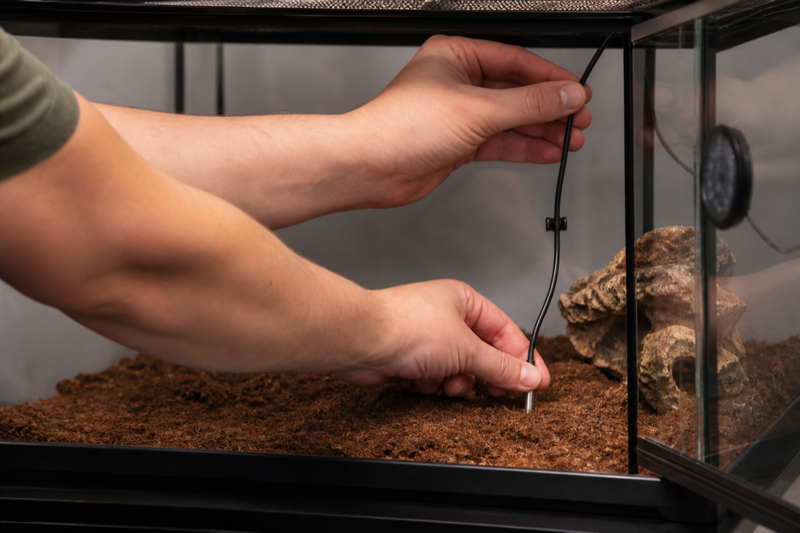
A sensor near a vent, water bowl or heat source may not represent the area the animal uses. Secure cables and probes so they cannot shift or create a hazard. Compare devices in the same position before blaming a difference on accuracy.
Monitoring and control are separate jobs
A thermometer tells you what happened at its sensor. A thermostat changes power to a heat source. An app may store readings or send alerts, but it does not make an uncontrolled heater safe. Every heat source that needs regulation should use an appropriate thermostat, with independent thermometers used to verify the enclosure.
Surface and air temperatures are not interchangeable. An infrared thermometer reads a surface at that moment. A digital probe or sensor reads the air or the point around the probe over time. The readings can differ while both instruments are working correctly.
What to buy first
- Digital thermometers for the warm and cool areas
- An infrared thermometer for basking surfaces and spot checks
- A suitable thermostat for each controlled heat source
- A remote sensor or alarm if off-site warnings matter to you
Wireless sensors add graphs and alerts, but their connection type matters. Bluetooth usually requires you to stay nearby. Wi-Fi or a separate gateway can support remote access, provided the home internet and power are working. An offline alert inside the room and a backup thermometer still have value.
Placement changes the reading
Put monitoring sensors where the animal experiences the environment, not wherever the display looks tidy. Use more than one point to understand the gradient. Secure cables and probes so the animal cannot pull them into a different location or become tangled.
A thermostat probe has a different purpose and its placement depends on the heat source and enclosure. Follow the thermostat and heater instructions. If the probe can be covered, moved or detached, the controller may respond to the wrong temperature.
A simple accuracy check
Place comparable sensors together for several hours and note their spread. Check them again at a stable room temperature and after a battery change. Large disagreements, slow response or impossible jumps deserve investigation. Do not “calibrate” a sensor merely to match the reading you hoped to see.
FAQ
Can one sensor cover a large enclosure?
One point cannot describe a gradient. Warm and cool side readings are a sensible minimum for many setups.
Do app alerts work during an outage?
Often they do not. The sensor, gateway, router and internet connection all need power unless the system has a separate backup path.
Connect readings to routine care: Use the guide to managing a large reptile collection to schedule equipment checks, and review app export and privacy before storing long-term sensor history.