Verdict: To manage a large reptile collection, build a boring system that survives busy days. Stable identity, short logging steps and regular backups prevent more errors than a complicated dashboard.
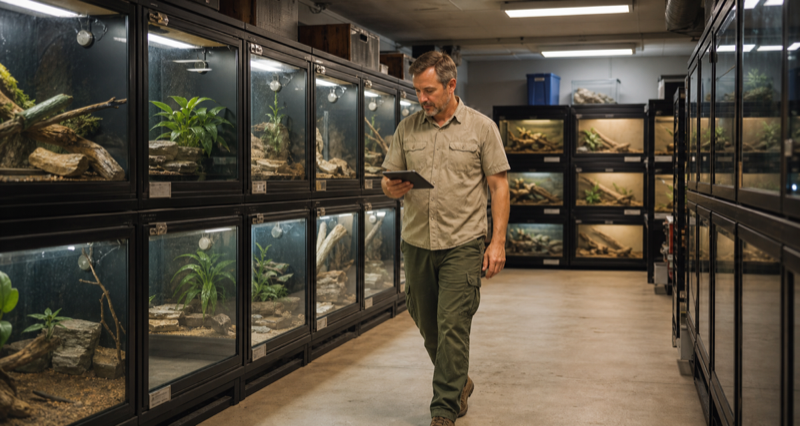
Give every animal a stable ID
Names can repeat and enclosures can move. Use an ID that stays with the animal, then display it on the profile, enclosure and export. Never recycle an old ID.
Design rounds around exceptions
Routine work should be quick to record. Refusals, unusual weight changes, medication and incomplete sheds need more visible follow-up. An exception list is often more useful than a stream of every normal event.
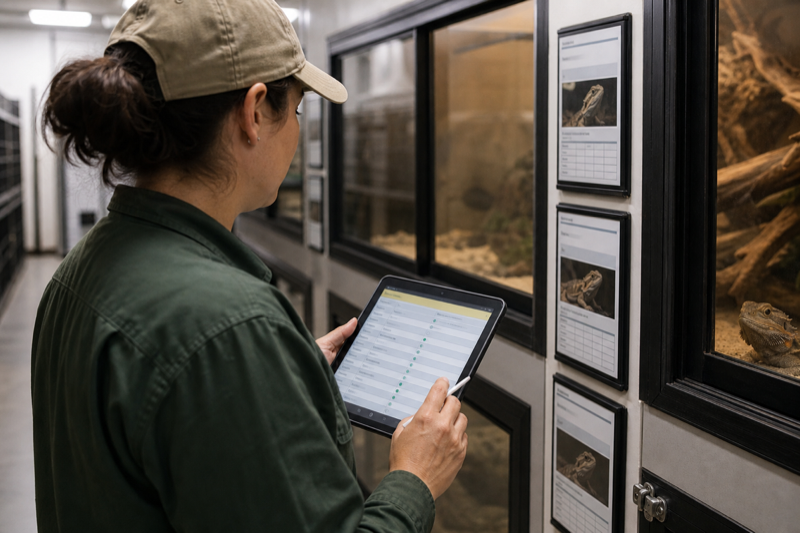
Limit batch actions
Batch entry saves time, but only when the selected animals remain obvious. Review the selection before saving and confirm a sample afterward. Make correction steps part of staff training.
Back up outside the app
Schedule exports and store them in a second location. Open a backup occasionally. A file that exists but cannot be read is not a useful backup.

Review the system monthly
Look for skipped fields, duplicate reminders and profiles that are hard to identify. Remove steps nobody uses. A collection workflow should become calmer as it matures.
Build the system around exceptions
Routine feeding is easy. Refusals, temporary enclosures, medication, loans, sales and staff changes expose weak record systems. Give every animal a permanent ID and every enclosure a location code. Names can change without breaking history.
Separate the daily queue from the archive
Active tasks should show what needs attention today. Historical records should remain searchable but stay out of the queue. Archive sold or deceased animals without deleting them. Use status fields for quarantine, breeding loans and temporary holds.
Reduce batch mistakes
- Review the selected rack or group before saving.
- Show the event date and action in plain language.
- Give helpers only the permissions they need.
- Keep correction and undo tools easy to find.
- Export a dated backup before major reorganizations.
Handoffs need context
A helper needs animal identity, enclosure location, the exact task and the last relevant event. They do not need every breeding or sales field. Role-based views and completion records reduce both clutter and uncertainty. Never solve collaboration by sharing the owner’s password.
Audit once a month
Compare the digital list with the physical room. Look for duplicate IDs, animals in the wrong location, overdue tasks that were actually completed and profiles with no recent activity. Open the latest export on another device. A backup that has never been opened is only a hope.
FAQ
How many animals justify an app?
The threshold is personal. Complexity, breeding activity and the number of helpers matter more than the raw count.
Should every action be logged?
No. Track events that support care, health, compliance or reliable handoffs. Too much logging lowers consistency.
Choose supporting tools: Our guide to the best reptile apps for breeders covers collection structure. The feeding tracker comparison focuses on the busiest recurring workflow.