Editorial note: this review covers the current fifth-generation Starter kit and published parts list. Exact bundles vary by retailer and region, so compare the cart contents before ordering.
Verdict: MistKing Starter v5 is a strong foundation for one to several tropical enclosures. The pump, fine check-valved nozzle, standard tubing and seconds timer are built like a small system rather than a disposable appliance. It costs more work at installation because the reservoir is not included and the kit ships with only one nozzle.
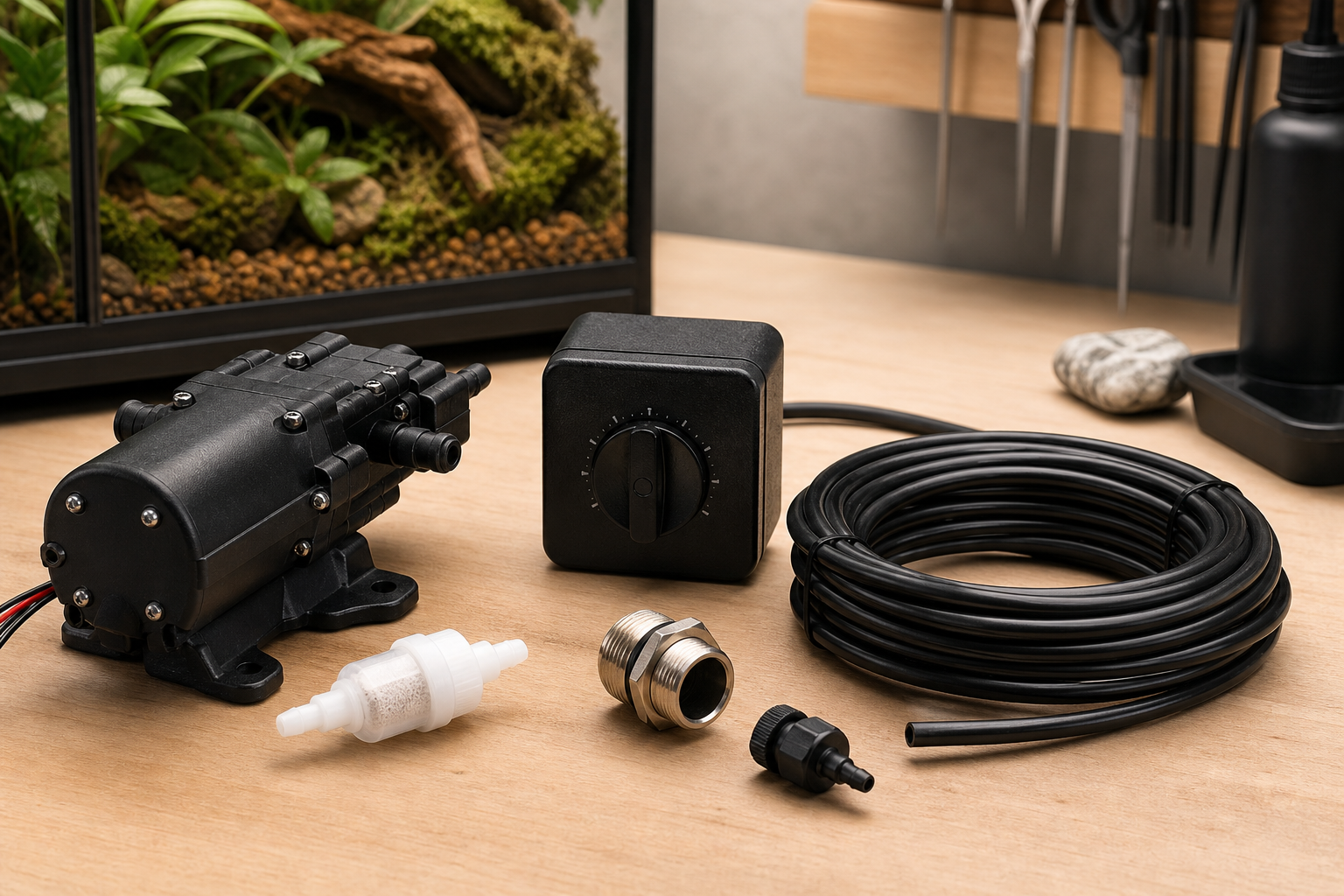
What the v5 kit includes
| Part | Current package |
|---|---|
| Pump | 24V DC pump, rated by MistKing for up to ten nozzles |
| Nozzle | One Value L assembly with check valve and about 50-micron mist |
| Tubing | 15 feet of quarter-inch black opaque line |
| Reservoir hardware | Metal-thread bulkhead, O-ring, plug and white filter |
| Control | ST-24 digital seconds timer |
| Mounting | Five clips with screws |
| Not included | Water reservoir and common optional parts such as ZipDrip or screen wedges |
The pump is the reason to buy the system
MistKing describes the low-voltage pump as capable of running dry without damage and supports up to ten standard nozzles. Vibration-damping feet help, but mounting surface matters. A hollow cabinet can amplify a quiet pump into a noticeable buzz.
Place it on a firm pad, keep airflow clear and avoid fastening it directly to resonant furniture. Test noise at night from the nearest bedroom before finalizing the location.
One nozzle is enough to test, not always to finish
The included Value L nozzle uses a check-valved tip to reduce dripping. The fine mist can wet leaves without producing the coarse spray common to low-pressure kits. One nozzle may cover a compact vivarium; a tall planted enclosure often benefits from a second angle.
Add heads after watching the empty enclosure. The pump’s ten-nozzle rating is a ceiling, not a target. Long runs, elevation and fittings influence the pattern. The broader reptile misting systems comparison explains how to evaluate coverage and pressure.
The missing reservoir is both flaw and advantage
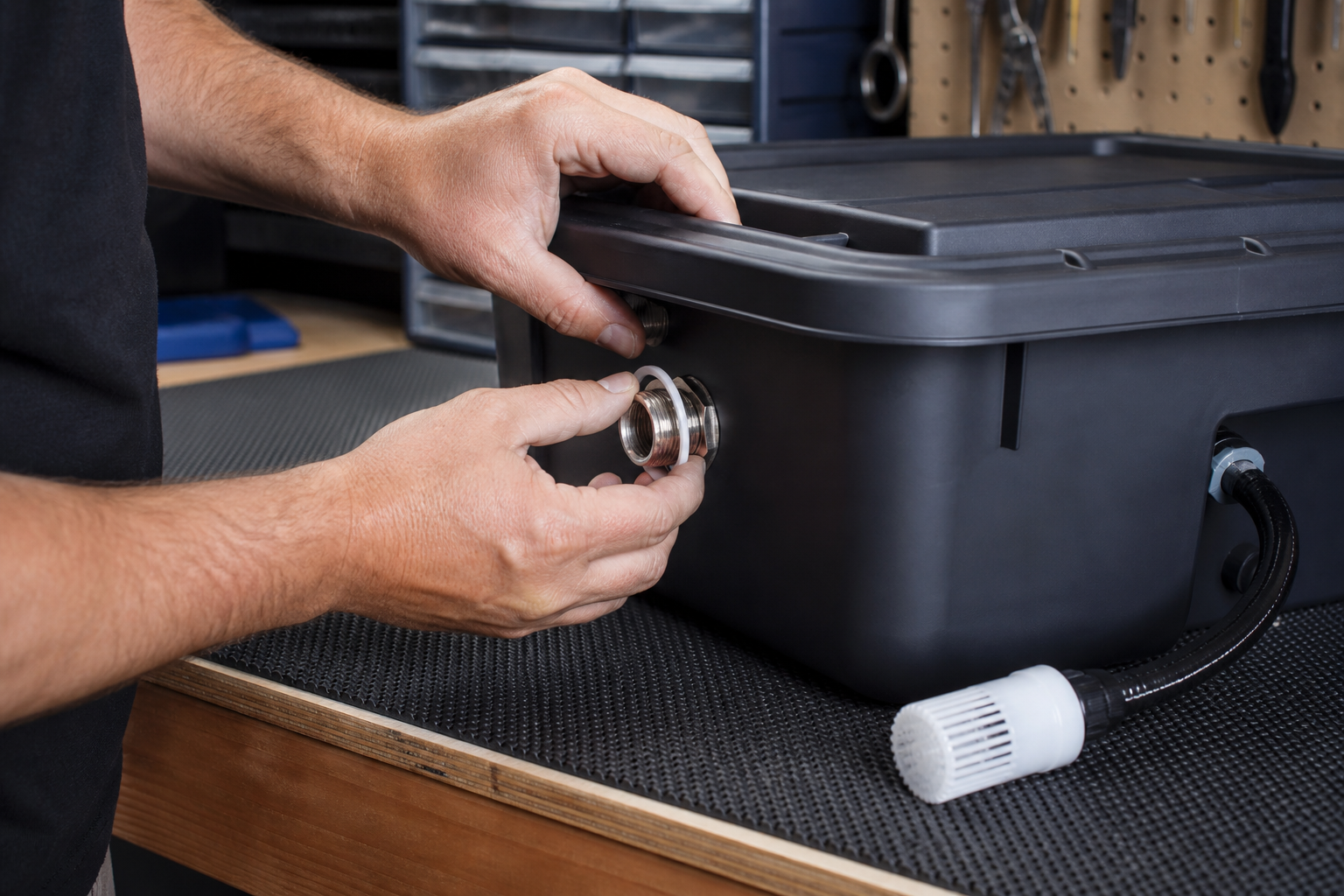
You supply a bucket or container and install the included bulkhead. This adds drilling, cleaning and leak testing. It also lets a keeper choose a sealed reservoir large enough for the schedule.
Use a sturdy opaque food-safe container with a lid. Drill the hole at the size and height in the instructions, remove plastic debris, seat the O-ring correctly and fill the container somewhere a leak cannot cause damage. Mark the minimum operating level.
Do not use an open decorative tub. Light and debris encourage growth and clogging. A lid also prevents animals, children and household contaminants from reaching the water.
ST-24 timer
The seconds timer is a good match for misting because useful cycles may be shorter than a normal wall timer can schedule. MistKing says the fifth-generation electronics have a higher power rating than the earlier timer. That does not remove the need to test outage recovery.
Begin with short cycles and watch wetting and drainage. Set different events only when they reflect a reason, such as a morning drinking opportunity and a lighter evening cycle. Avoid programming complexity for its own sake.
Optional controllers
MistKing offers a repeat-cycle timer and hygrostat as alternatives. A repeat timer suits frequent intervals. A hygrostat switches by measured humidity, which sounds precise but depends heavily on sensor location and response.
For most keepers, the ST-24 is the easier starting point. Use independent logging to understand peaks and drying. Only then decide whether closed-loop humidity control would improve anything.
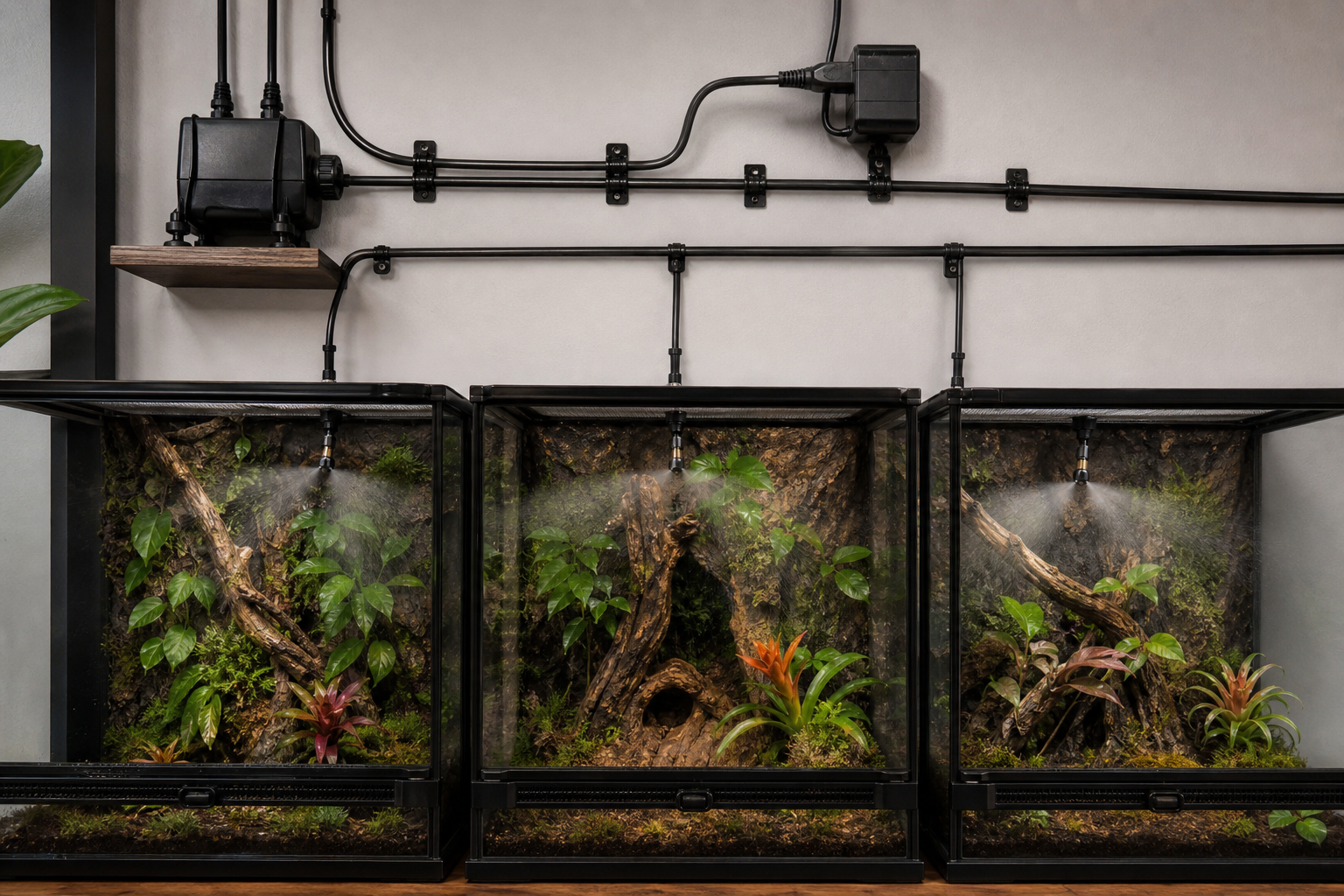
Installation sequence
- Choose pump and reservoir locations away from mains connections.
- Install and leak-test the reservoir bulkhead.
- Cut tubing square and push every connection fully home.
- Mount the nozzle and check the spray path with no animal present.
- Secure tubing away from heat, doors and sharp edges.
- Prime the system using the manual’s procedure.
- Program a short test cycle and inspect every fitting.
- Run the final schedule for several days while logging humidity.
Drips and ZipDrip
Check-valved tips reduce post-cycle dripping, but water under pressure still needs somewhere to go. MistKing sells ZipDrip to release line pressure and stop residual drops. It is optional on the Starter package.
Before buying it, observe where the included nozzle drips and whether that water matters. A drop onto soil may be harmless. A drop onto a lamp guard, electrical opening or permanent sleeping spot needs correction.
Water quality
Fine nozzle openings punish hard water. Use the water type recommended by MistKing, keep the reservoir covered and inspect the white filter. Its light color makes debris easier to see.
Never add supplements or cleaner to the reservoir casually. Aerosol exposure and material compatibility change when a liquid passes through a high-pressure misting system.
Expansion planning
The stock pump is intended for up to ten nozzles. MistKing recommends the larger MKP-100 for up to twenty. Plan the room on paper before adding branches. Keep each run serviceable and label the line by enclosure.
For several enclosures, add isolation valves only if supported and document their normal position. A closed branch can change pressure elsewhere. After every expansion, repeat the coverage and leak test.
Monitoring the result
Humidity peaks immediately after misting are less informative than the full recovery curve. Place a splash-resistant logger outside the direct cone and record how long the enclosure remains wet. The thermometer and hygrometer guide covers sensor saturation and placement.
Also watch temperature. Evaporation and wet surfaces can cool the enclosure, and a nozzle aimed near the thermostat probe can affect heat control. Review the temperature monitoring guide when the two systems interact.
Maintenance routine
- Check reservoir level and clarity at every refill.
- Inspect bulkhead, filter and pump-side fittings weekly at first.
- Watch each nozzle pattern and clean by the official method.
- Wipe spilled water before it reaches cables.
- Record timer changes and nozzle replacements.
- Keep one spare nozzle tip and enough tubing for a repair.
Who should buy it?
Choose MistKing Starter when fine mist, quiet operation, replaceable parts and later expansion justify a little plumbing. It suits chameleon, gecko, frog and planted-vivarium rooms where a repeatable wetting cycle matters.
Choose a self-contained system for one small enclosure when you value a built-in reservoir more than expansion. Skip automatic misting when hand spraying already produces consistent care and the extra water near electricity would add needless risk.
Commission the system before animals depend on it
Run a new installation with the enclosure empty or while the animal is safely housed elsewhere. Check every push-fit connection with dry tissue, because a slow leak may travel along tubing before it drips. Trigger several short cycles, then one longer cycle. Watch the reservoir level, pump sound, spray cone and drainage instead of judging the system from humidity alone.
Leave the setup for a full day and inspect again. Tubing can relax after installation, and a nozzle aimed correctly when dry may move after repeated starts. Confirm that water does not pool near electrical equipment, block ventilation or saturate the substrate beneath one corner. Only then should the normal schedule begin.
Designing for power cuts and empty reservoirs
The pump may tolerate running dry, but the enclosure still loses its water cycle. Mark a refill line on the reservoir and calculate how many normal days it covers. A transparent or externally readable container makes the daily check fast. In a large room, a low-level alarm is more valuable than a bigger opaque reservoir that hides consumption.
After a power interruption, verify what the timer does with its clock and saved programs. Test this deliberately by unplugging the system for a few minutes. Keep a manual spray bottle ready for the gap between a fault and a repair, and store a spare union, nozzle and short length of tubing with the system.
Noise, placement and service access
The pump should sit on a stable surface where vibration cannot resonate through a cabinet. Soft isolation feet can reduce transmitted noise, but the pump still needs ventilation and easy access. Avoid burying it behind enclosures or routing tubing so tightly that the unit cannot be removed without dismantling the rack.
Plan the reservoir in the same way. It needs enough clearance to remove the lid, clean the container and reach the bulkhead. A tidy installation that cannot be serviced will eventually be neglected. Photograph the original tubing route and label each branch if one pump serves several enclosures.
Frequently asked questions
Does the MistKing Starter include a reservoir?
No. It includes the bulkhead and filter used to convert a suitable container.
How many nozzles can the stock pump run?
MistKing rates the current Starter pump for up to ten nozzles. Layout and fittings still need testing.
Is ZipDrip included?
No. It is an optional accessory. The included nozzle has a check valve that reduces dripping.
Can the pump run dry?
MistKing says the current low-voltage pump can run dry without damage. A dry reservoir still interrupts care, so monitor water level.